

Heat vs. Emergency Heat: What Virginia Homeowners Should Know About Heat Pumps

At Virginia Air Heating & Cooling, we often hear confusion around whether homeowners should run their heat pump on the regular heat setting or switch to emergency heat during winter. Much of the information online is generic and doesn’t always apply to the weather conditions we experience here in Virginia.

The reality is simple: outdoor temperatures and winter weather conditions play a major role in how your heat pump performs. Understanding when each setting makes sense can help you stay comfortable while keeping energy costs under control.
Why Heat Pumps Are Designed for Efficiency
Heat pumps were created to provide an energy-efficient alternative to traditional electric heating systems. Before heat pumps became common, most homes relied on electric furnaces or air handlers for heat and straight air conditioning systems for cooling.
Electric furnaces produce heat using electric resistance elements, which can consume a significant amount of electricity. Heat pumps, on the other hand, work by moving heat instead of creating it.
In cooling mode, they pull heat from inside your home and release it outdoors.
In heating mode, they absorb heat from the outdoor air and release it inside.
This process makes heat pumps highly efficient during mild to moderately cold weather and ideal for much of our Virginia climate.
What Happens During Colder Temperatures?
As outdoor temperatures drop, the outdoor coil on a heat pump can begin to frost over. When this happens, the system enters defrost mode.
During defrost:
The outdoor fan temporarily stops
The refrigerant flow reverses to warm the outdoor coil
Heat delivery to your home pauses unless auxiliary (backup) heat is available
The colder it gets, the more often defrost cycles occur. Each defrost cycle increases reliance on auxiliary heat, which uses more electricity and can raise energy costs.
This is why some homeowners choose to:
Keep the system on regular heat if it maintains the set temperature
Switch to emergency heat if the system struggles to keep up or if they prefer warmer air from the vents
At Virginia Air Heating & Cooling, we leave that decision up to the homeowner while helping them understand the impact on comfort and energy usage.
How Winter Weather Impacts Your Heat Pump
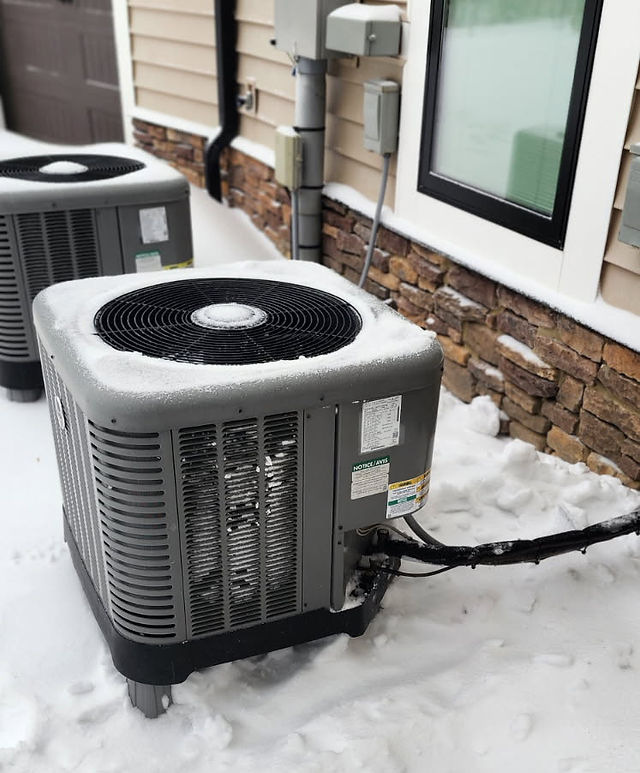
Winter precipitation can significantly affect how well a heat pump operates.
Conditions such as:
Snow accumulation
Sleet or freezing rain
Extended periods of below-freezing temperatures
can restrict airflow through the outdoor unit. While defrost mode is designed to clear frost from the coils, it is not intended to melt heavy ice buildup or clear snow blocking airflow.
The lower portion of the outdoor coil is especially important. When snow or ice blocks airflow at the base of the unit, system performance can drop and auxiliary heat may run more often.
Homeowners who prefer not to use emergency heat during these conditions may find themselves needing to monitor and clear snow frequently to keep the system operating efficiently. Just be aware, you can damage your unit, wires and/or line set clearing snow and ice off the outdoor unit using any instruments or extreme pressure to try and remove snow and ice. Weigh and measure what is most important to you; chancing damage and being stuck to use emergency heat plus pay for repairs, or, just turn your heat pump to the emergency heat setting until nature can slowly melt the snow and ice off the outdoor unit.
Don’t Overlook the Refrigerant Lines
Another important but often overlooked component is the refrigerant line set that connects the indoor and outdoor units. These lines allow refrigerant to travel back and forth to heat or cool your home.
If the line set becomes buried in snow or ice, system performance can be affected. Keeping this area clear helps ensure proper operation during winter conditions.

The Bottom Line for Virginia Homeowners
Heat pumps are an excellent, energy-efficient heating solution—but they do have limitations during extreme winter weather.
Regular heat works well when outdoor conditions allow
Emergency heat can be the better option when temperatures drop significantly or airflow is restricted
Snow, sleet, freezing rain, and prolonged cold all impact system performance
There is no one-size-fits-all answer. The best setting depends on your system, the weather, and your comfort preferences.
If you’re unsure which setting is best for your home—or if your heat pump isn’t performing as expected—Virginia Air Heating & Cooling is here to help. Our team can evaluate your system and provide guidance to keep your home warm, efficient, and protected all winter long.